
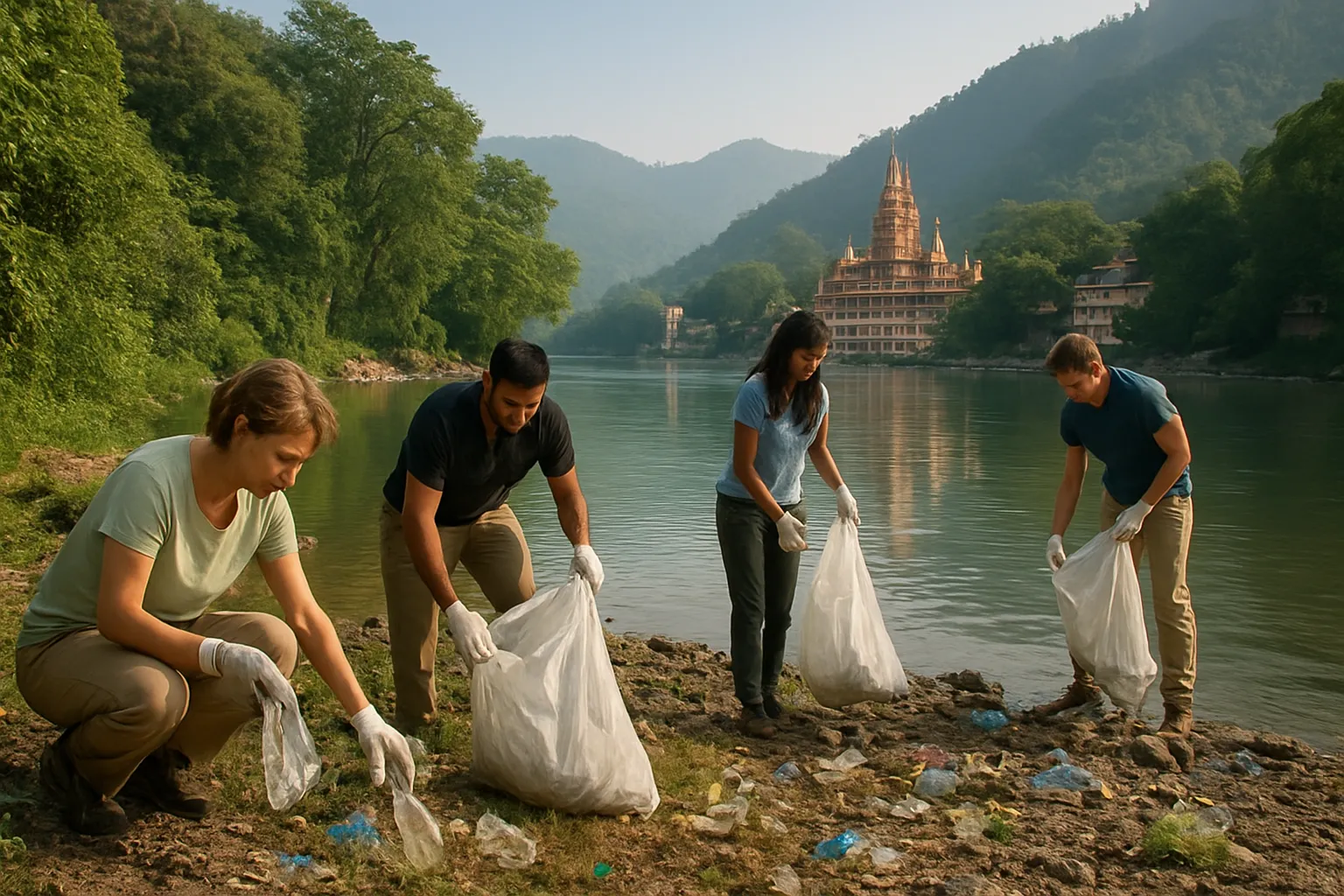
The Ganga river plastic waste video has taken social media by storm, showcasing a group of foreign tourists actively collecting plastic waste along the sacred Ganga River in Rishikesh. This footage has ignited a nationwide debate concerning civic responsibility and environmental awareness in India. As the video continues to gain traction, it underscores the persistent issue of pollution in the Ganga, prompting widespread discussions on the role both citizens and tourists play in preserving the country’s natural resources.
This viral incident has captured the attention of media outlets and the public alike, raising critical questions about the effectiveness of current waste management practices in the region. With environmental concerns at the forefront, this event serves as a poignant reminder of the ongoing challenges faced by the Ganga River, revered not only for its sacred significance but also for its crucial role in sustaining millions of lives.
Ganga river plastic waste video highlights environmental issues
The Ganga river plastic waste video reveals foreign tourists engaging in hands-on efforts to clean the banks of the Ganga River, a sight that has surprised and inspired many. The video captures these tourists diligently collecting plastic waste, highlighting a proactive approach to tackling pollution in the area. This initiative by non-residents has sparked curiosity and admiration, as it showcases a genuine concern for the environment from people outside the local community.
Public reactions to the video have been mixed, with a significant portion of viewers praising the tourists for their dedication and initiative. Many believe that their actions serve as a wake-up call for locals to take more responsibility for their surroundings. On social media platforms, discussions are rife, with numerous individuals expressing their views on the necessity of adopting such environmental practices universally.
While the initiative was spearheaded by foreign tourists, it has undeniably left an imprint on the local population, prompting introspection and dialogue about the importance of maintaining cleanliness in sacred and ecologically significant areas like the Ganga River.
Impact on civic responsibility discussions
The Ganga river plastic waste video has intensified debates on civic responsibility, with many questioning the apathy towards environmental degradation among locals. This video has become a catalyst for discussions about the role of citizenship in maintaining public spaces and natural resources. It has inspired various community groups and individuals to reconsider their contributions towards environmental conservation.
Local authorities and environmental groups have been prompted to address these concerns more fervently. Some local leaders have acknowledged the need for increased civic responsibility among residents, while environmental organizations see this as an opportunity to push for greater involvement in conservation efforts. This incident is being compared to other successful environmental awareness initiatives across India, where community-driven actions have led to meaningful change.
However, the challenge remains in sustaining this momentum. While similar initiatives have been launched in other parts of the country, maintaining long-term engagement and ensuring effective waste management practices are implemented consistently has proven difficult.
Plastic waste problem in the Ganga
The Ganga River, one of the most revered rivers in India, suffers from significant pollution. According to recent reports, the river is inundated with various pollutants, with plastic waste being a predominant issue. The sources of this plastic waste are diverse, ranging from industrial discharge to domestic refuse, exacerbated by the influx of tourists who, unintentionally, contribute to the problem.
The pollution levels in the Ganga have alarming consequences for local communities. It affects not only the ecological balance but also the health and livelihoods of millions who depend on the river for their daily needs. The contamination impacts the river’s biodiversity and poses a threat to human health, leading to waterborne diseases and other health hazards.
- Industrial waste discharge
- Sewage and domestic waste
- Plastic debris from tourism activities
Efforts to mitigate these issues have been initiated, but the scale of the problem requires more comprehensive and sustained action. As the Ganga river plastic waste video highlights, community involvement and robust policy implementation are critical to addressing these environmental challenges.
Foreign tourists and environmental activism
Foreign tourists have played a pivotal role in raising awareness about environmental issues in India. Their involvement in initiatives such as the one depicted in the Ganga river plastic waste video demonstrates the potential impact of international visitors on local environmental practices. These tourists bring with them diverse perspectives and practices that can influence local communities positively.
Tourist-led environmental initiatives have seen success in various parts of India, where their efforts have led to cleaner beaches and more sustainable tourism practices. However, these initiatives often face challenges, including limited resources, bureaucratic hurdles, and the need for local cooperation. Despite these obstacles, the presence of tourists actively participating in environmental conservation can inspire locals to adopt similar practices.
These efforts underscore the importance of collaboration between locals and visitors in fostering a culture of environmental stewardship. By sharing knowledge and resources, and by learning from each other’s experiences, both groups can work towards a cleaner and more sustainable environment.
Government and NGO responses to pollution
The Indian government has implemented several policies aimed at reducing river pollution, focusing on improving waste management and promoting sustainable practices. Initiatives such as the Namami Gange programme aim to rejuvenate the Ganga River through comprehensive pollution abatement measures and maintaining ecological flow.
Non-governmental organizations (NGOs) have also been instrumental in addressing the pollution problem. They often collaborate with local communities and government bodies to conduct cleanup drives, educational workshops, and advocacy campaigns. These efforts have been crucial in raising public awareness and promoting community engagement in environmental conservation.
Looking forward, both government and NGOs are exploring innovative solutions to enhance waste management systems and promote sustainable practices. The focus is on developing and implementing strategies that can effectively address the issue in the long term, ensuring the Ganga River remains a vital resource for future generations.
Public awareness campaigns and their effectiveness
Public awareness campaigns have played a significant role in educating communities about the importance of reducing pollution in the Ganga River. These campaigns, often initiated by both government and non-governmental entities, aim to inform the public about the adverse effects of pollution and encourage active participation in cleanup activities.
Community engagement is a critical component of these campaigns, as it fosters a sense of ownership and responsibility among residents. Educational efforts, including workshops and seminars, have been successful in spreading awareness and motivating individuals to adopt eco-friendly practices. However, measuring the impact of these campaigns remains a challenge, as behavioral change takes time and sustained effort.
Despite these challenges, the continuous efforts to engage communities and educate them about environmental conservation are vital. By fostering a culture of awareness and responsibility, these campaigns contribute to the broader goal of preserving the Ganga River and ensuring its cleanliness for future generations.
Frequently Asked Questions
What is the Ganga river plastic waste video about?
The video shows foreign tourists collecting plastic waste along the Ganga River, highlighting environmental issues and civic responsibility.
Why is the Ganga River important?
The Ganga River is considered sacred in Hinduism and is vital for the livelihoods of millions, making its cleanliness essential for both cultural and environmental reasons.
What are the main causes of pollution in the Ganga?
Pollution in the Ganga is caused by industrial waste, sewage discharge, and plastic waste from both locals and tourists.
How can individuals help reduce plastic waste in rivers?
Individuals can participate in cleanup drives, reduce plastic usage, and support policies aimed at river conservation.
Conclusion
The Ganga river plastic waste video has brought significant attention to the issues of pollution and civic responsibility in India. As foreign tourists take the initiative to clean up the sacred river, it serves as a powerful reminder of the collective effort required to address environmental challenges. This incident has sparked meaningful discussions and highlighted the need for improved waste management practices. Moving forward, it is imperative that both locals and tourists collaborate to preserve the Ganga River for future generations, ensuring it remains a vital and revered resource.