
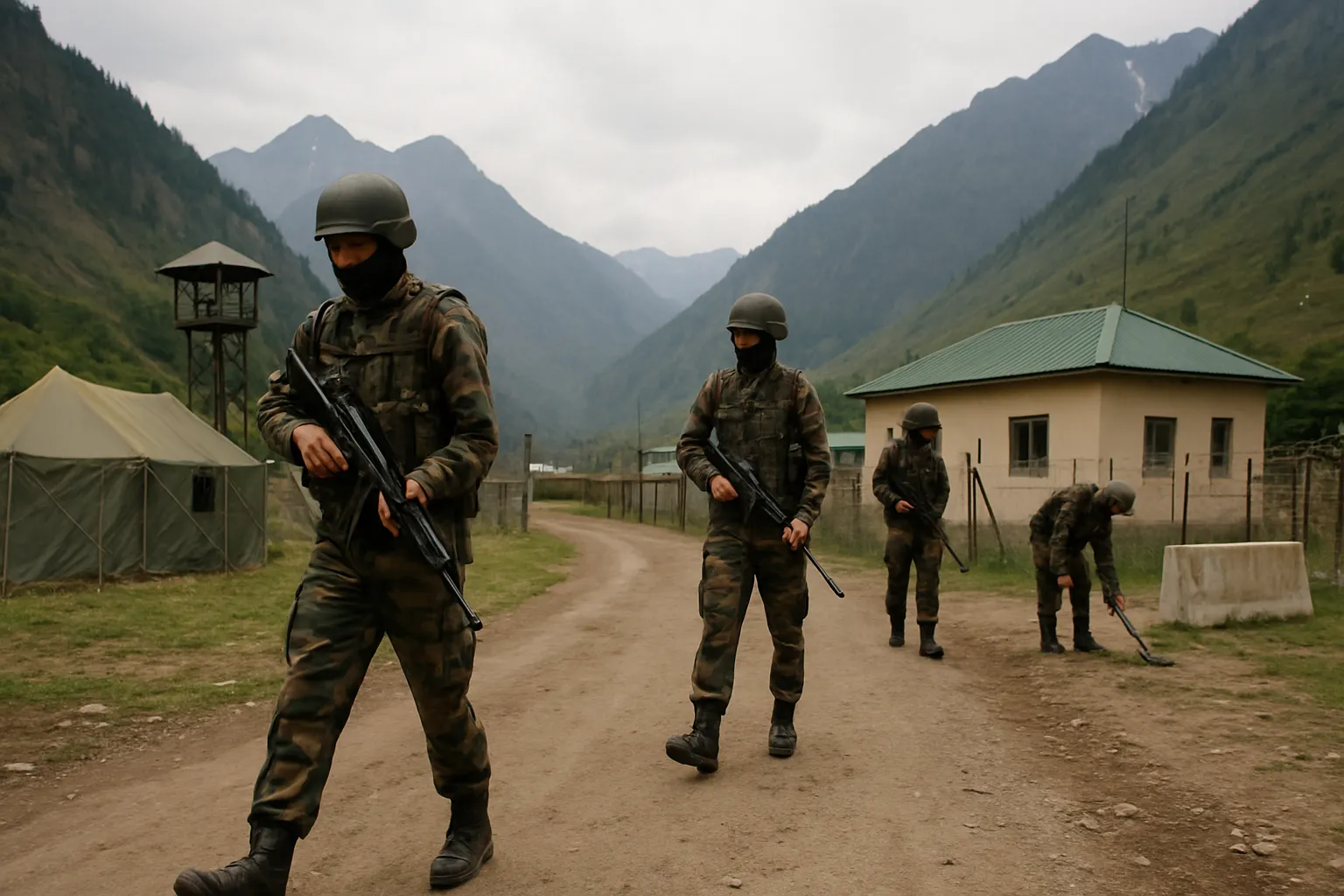
The Kulgam terror attack has once again brought to light the persistent security challenges faced by the region of Jammu and Kashmir. As militants targeted a Central Reserve Police Force (CRPF) camp located in Kulgam, the incident resulted in injuries to three security personnel, raising alarms and triggering an extensive search operation. The attack, suspected to involve militants affiliated with Lashkar-e-Taiba (LeT), underscores the volatile situation in the region and the ongoing threats faced by security forces.
In the immediate aftermath of the attack, which was executed by militants on motorcycles, the response from security forces was swift. A coordinated effort to apprehend the attackers is now in full swing, with security personnel combing through potential hideouts and maintaining heightened vigilance. The incident has sent shockwaves through the local community, prompting calls for increased security measures and highlighting the ongoing struggle against militancy in the area.
Kulgam Terror Attack Overview
The Kulgam terror attack unfolded in the early hours at a CRPF camp, located in the strategically sensitive region of Kulgam in Jammu and Kashmir. The attackers, reportedly riding motorcycles, opened fire on the security personnel stationed at the camp. This brazen assault left three CRPF personnel injured, according to initial reports.
The attack took place amidst a period of heightened security in the region, with the involvement of militant groups suspected. The injured personnel were promptly evacuated for medical treatment, as their conditions were assessed by on-site medical teams. This incident comes as a stark reminder of the ongoing security challenges in Kulgam and the surrounding areas. The attack’s location, a CRPF camp, highlights the strategic targeting by militants aiming to destabilize security operations and demoralize the forces stationed in the region.
Details of the Attack
The attack on the CRPF camp in Kulgam was executed with precision and speed. Militants approached the camp on motorcycles, a method that has been employed in the past due to its mobility and ease of escape. This tactical choice allowed the attackers to quickly engage the security forces and retreat before reinforcements could arrive.
Witnesses described the scene as chaotic, with gunfire echoing through the area and security personnel responding under pressure. The swift nature of the attack and the choice of motorcycles suggest a planned operation, aimed at inflicting maximum damage with minimal exposure to the attackers themselves. This modus operandi reflects a calculated approach to insurgency, where surprise and speed are leveraged to challenge well-armed and trained security forces. Such tactics are indicative of a deeper strategy employed by militant groups to sustain their campaigns against state forces.
Injured Personnel and Response
The CRPF personnel injured in the Kulgam terror attack were immediately attended to by their fellow officers and medical teams. The injuries sustained by the three personnel ranged from minor to severe, necessitating urgent medical intervention. They were quickly transported to the nearest medical facility for treatment.
Official statements from the CRPF and local authorities have underscored the bravery of the injured personnel and affirmed their commitment to bringing the perpetrators to justice. Medical teams are providing round-the-clock care, ensuring the best possible outcomes for those injured in the line of duty. The resilience and immediate response of CRPF personnel demonstrate the preparedness and dedication of security forces in the face of unforeseen attacks, which is crucial for maintaining morale and operational effectiveness in conflict zones.
Search Operations Launched
Following the attack, a comprehensive search operation was launched to track down the attackers. Security forces have spread out across Kulgam and its surrounding regions, focusing on areas identified as potential hideouts for militants. Coordination between the CRPF, local police, and other security agencies is crucial in this operation.
The search involves both ground patrols and aerial surveillance, providing a multi-layered approach to locating the suspects. Authorities have urged the public to remain vigilant and report any suspicious activities, ensuring that the attackers are apprehended swiftly. This coordinated effort underscores the importance of intelligence-sharing and inter-agency collaboration in counter-terrorism operations, which are vital for effectively neutralizing threats and ensuring long-term security in the region.
Suspected Militant Groups
The involvement of Lashkar-e-Taiba (LeT) in the Kulgam terror attack is currently under investigation. LeT has a history of orchestrating attacks in the region, and their potential involvement highlights the ongoing threat posed by such groups. Security analysts point to the group’s previous activities in Kulgam as indicative of their capabilities and intentions.
- LeT has been previously linked to multiple incidents in Jammu and Kashmir.
- The group’s activities often target security forces and strategic installations.
- LeT’s involvement, if confirmed, will demand a recalibration of security strategies.
Kulgam, due to its geographical and strategic importance, remains a focal point for militant activities, necessitating constant vigilance and adaptive security measures. Understanding the operational patterns and motivations of groups like LeT is essential for formulating effective counter-insurgency strategies that can preemptively address and mitigate the risks posed by such organizations.
Public Reaction and Security Measures
The local community’s reaction to the Kulgam terror attack has been one of concern and apprehension. Residents have expressed their worries over the recurring violence and its impact on daily life. This sentiment has been echoed by local leaders, who are calling for enhanced security measures to protect both civilians and security personnel.
In response, authorities have increased security deployments in and around Kulgam, implementing measures designed to prevent further incidents. These include more frequent patrolling, checkpoints, and community engagement initiatives to foster cooperation between security forces and residents. The emphasis on community engagement is particularly important, as it builds trust and encourages the sharing of vital information that can aid in preventing future attacks. The community’s active participation in security efforts can significantly enhance the effectiveness of counter-terrorism strategies.
Frequently Asked Questions
What happened during the Kulgam terror attack?
The Kulgam terror attack involved militants opening fire on CRPF personnel, injuring three security personnel. The attack took place in Jammu and Kashmir.
Who is suspected to be behind the Kulgam attack?
The attack is suspected to have been carried out by militants affiliated with Lashkar-e-Taiba (LeT), although investigations are ongoing.
What measures are being taken after the attack?
A search operation has been launched to locate the attackers, with security forces actively patrolling the area to ensure public safety.
How has the local community reacted to the attack?
The local community has expressed concern over the security situation, calling for increased measures to protect residents and security personnel.
Conclusion
The Kulgam terror attack has highlighted the persistent challenges faced by security forces in Jammu and Kashmir. The attack underscores the need for continued vigilance and strategic responses to militant threats. As authorities work to apprehend those responsible and bolster security measures, the incident serves as a reminder of the resilience required to ensure peace and security in the region. For ongoing updates and detailed coverage, refer to NDTV News.